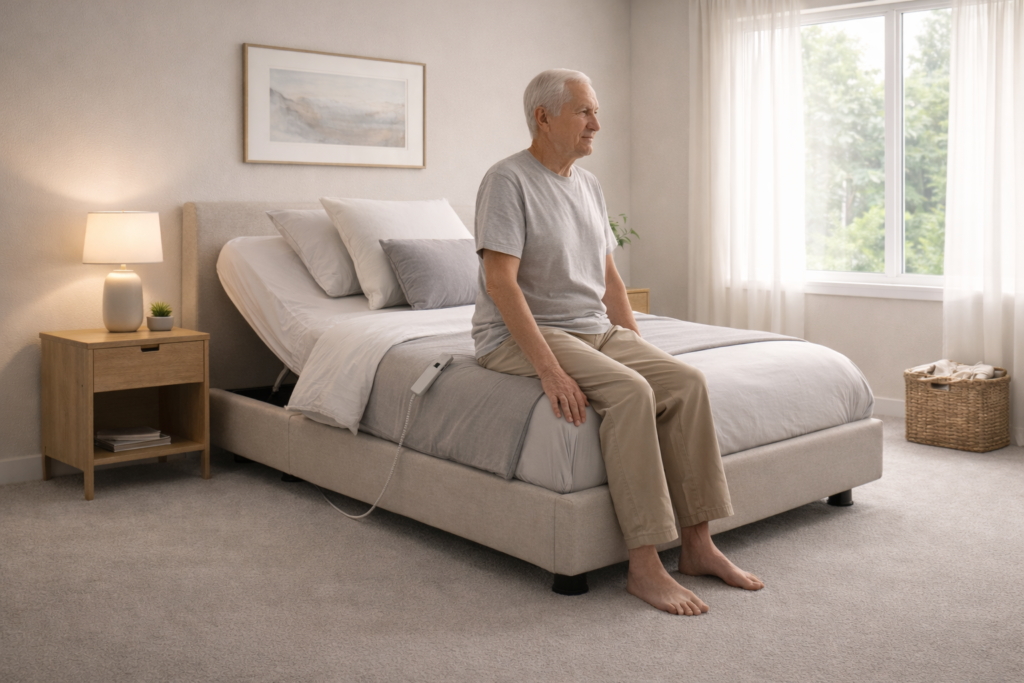
Adjustable medical beds are designed to support people who need more than a standard mattress but do not require a fully clinical hospital-style setup.
They provide controlled changes in head position, leg elevation, and often overall bed height. These adjustments can significantly improve daily comfort, reduce strain, and support independence in a home environment.
This guide explains how adjustable medical beds work, who they are most appropriate for, and how they support long-term comfort and mobility at home.
What Is an Adjustable Medical Bed?
An adjustable medical bed is a motorised bed designed for functional support rather than luxury features.
Unlike lifestyle adjustable bases, these beds prioritise:
-
Safe positioning
-
Stable frames
-
Transfer-friendly height
-
Compatibility with supportive mattresses
-
Long-term daily use
They are commonly used in private homes where someone needs regular repositioning, easier transfers, or increased stability.
While they may resemble standard upholstered beds, their internal structure and adjustment range are designed for practical care needs.
How Adjustable Positioning Improves Comfort
One of the most important benefits of an adjustable medical bed is the ability to change position throughout the day.
Head Elevation
Raising the upper body can:
-
Improve breathing comfort
-
Reduce strain when reading or watching television
-
Make eating in bed safer
-
Ease symptoms of reflux
For people who spend extended time resting, small changes in angle can reduce pressure on the lower back and shoulders.
Leg Elevation
Elevating the legs may:
-
Reduce swelling
-
Improve circulation comfort
-
Ease pressure on the lower spine
This can be particularly helpful for individuals with limited mobility or chronic discomfort.
Combined Positioning
The ability to adjust both head and legs allows more personalised support. Rather than relying on stacked pillows, the bed itself provides stable, even support.
This reduces slipping, uneven pressure, and frequent readjustment.
Height Adjustment and Independence
Not all adjustable beds include height control, but in medical models, height range is often a key feature.
Being able to raise or lower the bed platform supports:
-
Safer standing transfers
-
Reduced knee and hip strain
-
Easier caregiver assistance
-
Improved wheelchair alignment
When bed height matches seated height, standing becomes more controlled and less effortful.
This is one of the most significant differences between comfort-focused adjustable bases and medical-grade adjustable beds.
Reducing Physical Strain for Caregivers
Caregiver strain is an often overlooked factor in home care decisions.
Repeated bending, lifting, and repositioning can lead to long-term back and shoulder injuries.
An adjustable medical bed can:
-
Raise the bed to working height
-
Reduce awkward lifting angles
-
Support smoother repositioning
-
Improve visibility during care tasks
These practical benefits contribute to safer and more sustainable caregiving over time.
Supporting Long Periods in Bed
Some people use an adjustable medical bed only at night. Others spend extended hours resting during the day.
When time in bed increases, comfort becomes more complex.
Adjustable positioning allows:
-
Frequent micro-adjustments
-
Pressure redistribution
-
Reduced joint stiffness
-
Improved rest during recovery
Combined with an appropriate mattress, these adjustments help prevent discomfort from prolonged immobility.
When an Adjustable Medical Bed Is Most Appropriate
An adjustable medical bed may be appropriate when:
-
Standing from a low bed has become difficult
-
Frequent repositioning is needed
-
Caregiver assistance is increasing
-
Joint pain limits movement
-
Extended recovery is expected
It may not be necessary when needs are minimal or temporary. Many people manage well with a standard adjustable base and supportive mattress.
The decision typically depends on functional need rather than preference.
How Adjustable Medical Beds Differ From Home Hospital Beds
Adjustable medical beds are often more residential in appearance and moderate in capability.
Home hospital beds typically offer:
-
Greater height range
-
Stronger frames
-
Side rail compatibility
-
Clinical mattress integration
An adjustable medical bed sits between a lifestyle adjustable base and a full hospital-style bed.
It supports independence while maintaining a home-oriented appearance.
Emotional and Practical Balance
For many families, the goal is to maintain independence without making the bedroom feel clinical.
Adjustable medical beds often strike that balance.
They:
-
Blend into standard bedroom layouts
-
Offer practical support
-
Reduce visible medical cues
-
Provide long-term flexibility
This balance can make transitions feel less abrupt while still addressing real physical needs.
Planning Before Choosing
Because adjustable medical beds are long-term purchases, it helps to consider:
-
Current mobility level
-
Expected progression of needs
-
Bedroom space
-
Caregiver involvement
-
Mattress compatibility
Taking time to evaluate these factors reduces the risk of choosing a bed that becomes limiting later.
Comfort and independence are closely linked. The right level of adjustment can preserve both.