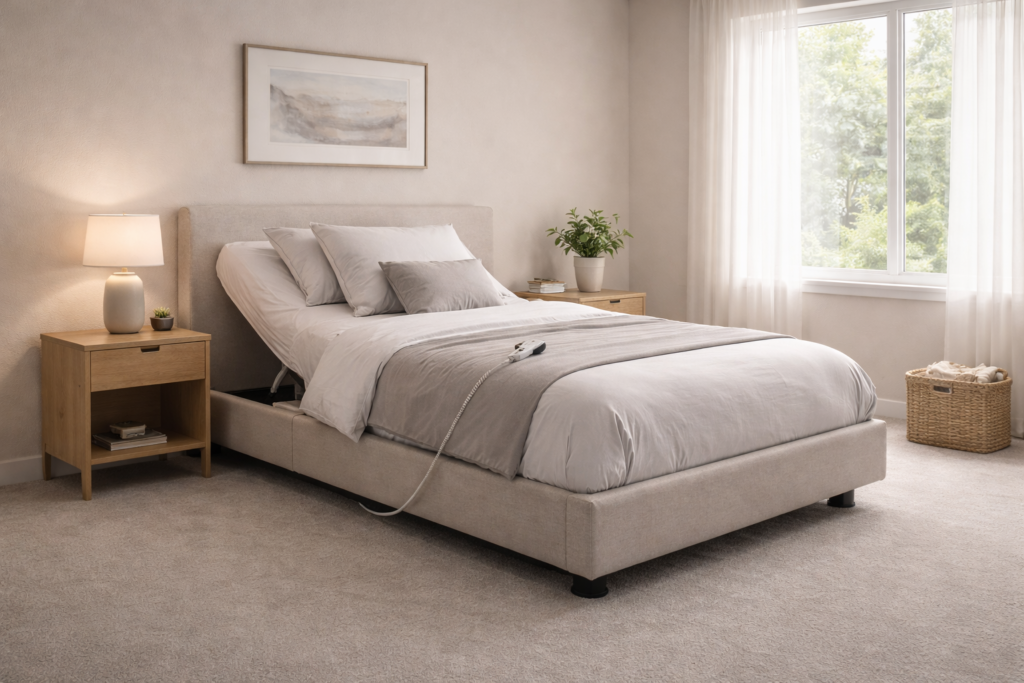
Home medical beds are adjustable beds designed to support comfort, safety, and long-term care in a residential setting.
They are commonly used by older adults aging at home, people recovering from surgery, and individuals managing chronic health conditions. Unlike standard bedroom beds, these beds allow controlled changes in height and position to improve comfort, reduce strain, and support daily care needs.
This guide explains what home medical beds are, how they differ from standard beds, and who they are most appropriate for.
What Is a Home Medical Bed?
A home medical bed is a bed designed to provide adjustable positioning and practical care support in a private home.
Most models allow:
-
Head elevation
-
Leg elevation
-
Height adjustment (raising or lowering the entire bed platform)
-
Stable side rail compatibility
-
Mattress systems designed for pressure redistribution
These beds may look clinical or residential depending on the design. Some resemble traditional bedroom furniture, while others are more clearly hospital-style in appearance.
The key difference is function. A home medical bed is built to support mobility limitations, caregiver assistance, and extended time spent in bed.
How Home Medical Beds Differ From Standard Adjustable Beds
Not all adjustable beds are medical beds.
Standard adjustable beds (often sold for comfort or lifestyle use) usually focus on:
-
Head and foot positioning
-
Comfort features such as massage
-
Low-profile residential styling
Home medical beds, by contrast, prioritize:
-
Safety
-
Transfer support
-
Caregiver access
-
Durability for long-term daily use
-
Compatibility with pressure care mattresses
In other words, a comfort-focused adjustable bed is designed for lifestyle enhancement. A home medical bed is designed for physical need and functional support.
The distinction becomes important when someone is managing reduced mobility, fall risk, or extended recovery.
Who Typically Uses a Home Medical Bed?
Home medical beds are most appropriate when mobility, safety, or long-term comfort become ongoing concerns rather than temporary inconveniences.
Common situations include:
Older Adults Aging at Home
As balance, strength, or joint flexibility change, getting in and out of a low bed can become difficult or unsafe. Adjustable height can reduce strain on knees and hips while improving independence.
People Recovering From Surgery
Short-term recovery from hip surgery, spinal procedures, or major illness often benefits from easier positioning and safer transfers.
Individuals With Chronic Conditions
People managing neurological conditions, respiratory challenges, advanced arthritis, or long-term fatigue may need regular repositioning throughout the day.
Those at Risk of Pressure Injuries
If someone spends extended time in bed, pressure redistribution becomes important. A compatible mattress system combined with adjustable positioning can reduce risk.
Caregivers Providing Daily Assistance
When lifting, repositioning, or supporting someone multiple times per day, bed height and angle adjustments reduce physical strain on caregivers.
When a Standard Bed Is No Longer Enough
A home medical bed is usually considered when:
-
Standing up from bed requires assistance
-
Frequent nighttime repositioning is needed
-
There is a history of falls during transfers
-
The person spends significant hours per day in bed
-
Caregivers are experiencing physical strain
This transition is rarely urgent. It is often part of a gradual shift in needs over time.
Recognizing that shift early can prevent injuries and make home care more sustainable.
Types of Home Medical Beds
There are two broad categories commonly used in residential settings.
Adjustable Medical Beds (Residential Style)
These beds are designed to blend more naturally into a bedroom environment. They offer motorized positioning while maintaining a less clinical appearance.
They are often appropriate when:
-
Independence is still high
-
Caregiver involvement is moderate
-
The priority is comfort plus safety
Home Hospital Beds
These resemble hospital beds more closely. They typically offer greater height range, stronger frames, and more attachment compatibility.
They are often appropriate when:
-
Mobility is significantly limited
-
Transfers require assistance
-
Medical equipment integration is needed
-
Long-term full-time bed use is expected
The right category depends on functional need, not preference alone.
What These Beds Are Designed to Support
Home medical beds are not about luxury features. They are about practical outcomes.
They support:
-
Safer transfers
-
Better positioning for breathing or circulation
-
Reduced caregiver strain
-
Improved pressure distribution
-
Greater comfort during long rest periods
Over time, these practical improvements can reduce complications and preserve independence.
Emotional Considerations
Choosing a home medical bed can feel significant.
For many families, it represents a visible shift in care needs. Some people worry it makes the home feel clinical.
In reality, modern options range widely in appearance. Many integrate quietly into residential spaces without dramatic visual change.
More importantly, the goal is stability and comfort — not appearance alone.
Is a Home Medical Bed Always Necessary?
No.
Many people manage well with standard adjustable bases, bed risers, or supportive mattresses.
A full medical bed is typically considered when:
-
Height adjustment becomes essential
-
Side rail support is required
-
Frequent assisted transfers are needed
-
Pressure care needs increase
The decision is rarely about features. It is about functional safety.
Planning Ahead
Home medical beds are usually long-term purchases. They are often part of a broader home setup strategy that may include:
-
Mattress selection
-
Bedroom layout adjustments
-
Transfer aids
-
Caregiver access planning
Because this is a high-ticket decision, most families benefit from calm, structured research before choosing a specific model.
Understanding who the bed is for — and why — is the first step.