Choosing a home medical bed is rarely a quick decision. It is usually made gradually, as needs become clearer and comfort, safety, or caregiving demands begin to change.
Because these beds are long-term investments, the right choice depends less on features and more on functional requirements. Understanding your current situation — and how it may evolve — is the most important first step.
This guide outlines the key factors to consider when deciding which type of home medical bed is appropriate.
Step 1: Clarify the Primary Need
Start by identifying the main reason you are considering a medical bed.
Common reasons include:
-
Difficulty standing from a low bed
-
Increased caregiver assistance
-
Extended time spent in bed
-
Pressure management concerns
-
Progressive mobility changes
Being specific about the primary need helps narrow the type of bed required.
For example:
If height adjustment is essential for safe transfers, a hospital-style bed may be more appropriate than a residential adjustable base.
If comfort and moderate positioning are the priority, an adjustable medical bed may be sufficient.
Step 2: Assess Current Mobility
Mobility level often determines the appropriate category of bed.
Consider:
-
Can the person stand independently from seated height?
-
Is assistance required for transfers?
-
Can they reposition themselves in bed?
-
Is balance stable during movement?
If independence is still relatively strong, a less clinical setup may support comfort without overcomplicating the room.
If transfers require assistance every time, broader height range and structural support become more important.
Step 3: Consider Time Spent in Bed
The number of hours per day spent in bed affects both bed frame and mattress selection.
If the bed is used primarily for overnight sleep, a moderate support system may be enough.
If rest periods extend into much of the day, additional features such as:
-
Wider height adjustment
-
Pressure-relief mattress compatibility
-
Easier caregiver access
become more relevant.
The longer the time in bed, the more positioning flexibility matters.
Step 4: Evaluate Caregiver Involvement
Caregiver safety and comfort are often overlooked in early decision-making.
Ask:
-
How often does someone assist with transfers?
-
Is bending or lifting becoming physically difficult?
-
Are repositioning tasks increasing?
A bed that raises to working height can significantly reduce strain.
Choosing a bed that supports both the user and the caregiver improves long-term sustainability of home care.
Step 5: Plan for Progression
In some situations, needs are stable.
In others, they are expected to change gradually.
If mobility is likely to decline, selecting a bed with greater adjustment range now may prevent replacement later.
This does not mean over-equipping prematurely. It means choosing a system that allows flexibility.
Planning ahead reduces disruption and additional cost in the future.
Step 6: Assess Bedroom Space and Layout
Practical space considerations matter.
Measure:
-
Room width and length
-
Clearance around the bed
-
Doorway width
-
Pathways for walking aids or wheelchairs
A hospital-style bed may require more clearance than a residential adjustable bed.
Ensuring adequate transfer space on at least one side improves safety.
Layout adjustments, such as moving furniture or repositioning bedside tables, may also be necessary.
Step 7: Match the Mattress to the Bed
The mattress should not be an afterthought.
If pressure relief is a concern, ensure compatibility between the bed frame and mattress system.
Consider:
-
Weight distribution
-
Repositioning frequency
-
Skin integrity
-
Comfort preferences
The bed frame and mattress work together. Selecting them as a system improves outcomes.
Step 8: Balance Function and Appearance
Some families hesitate because they worry a medical bed will make the bedroom feel institutional.
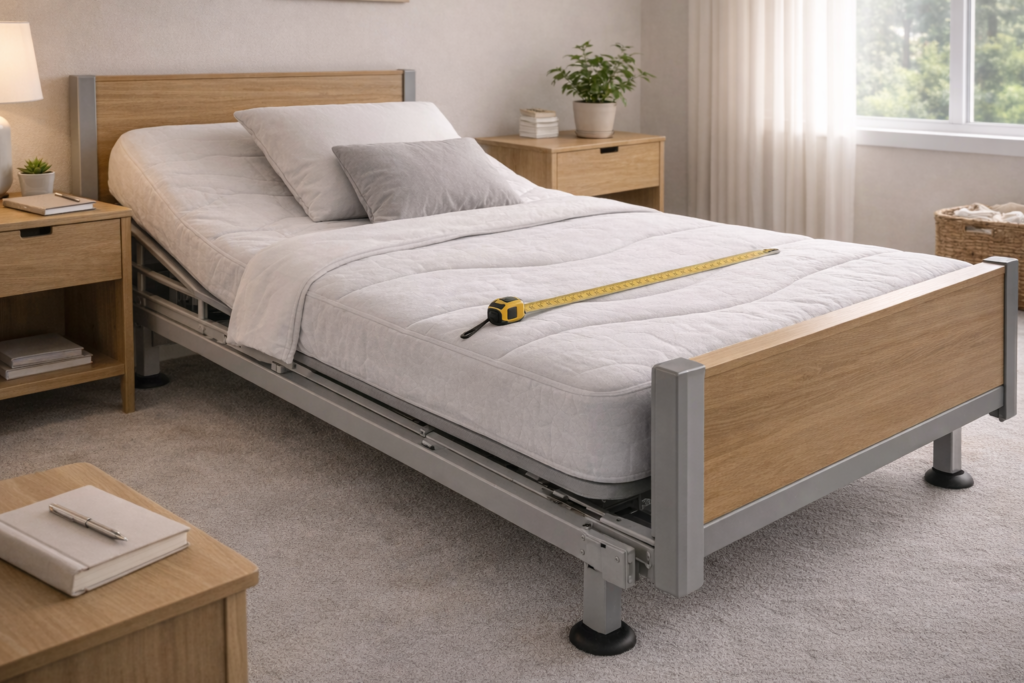
Modern options vary in appearance. Some include upholstered panels or wood finishes that integrate more naturally into residential spaces.
While aesthetics matter, safety and comfort should guide the decision.
The goal is stability and independence, not clinical atmosphere.
Common Decision Thresholds
A home medical bed is often appropriate when:
-
Standing independently becomes unsafe
-
Caregiver strain is increasing
-
Repositioning needs are frequent
-
Pressure management is a concern
-
Bed height must change regularly
When these thresholds are present, delaying equipment changes can increase risk.
Taking a Structured Approach
Rather than focusing on brand comparisons or isolated features, focus on fit.
Clarify:
-
What problem are we solving?
-
How often does this problem occur?
-
Is the situation stable or progressing?
-
What will make daily routines safer and easier?
When viewed through this lens, the right level of equipment becomes clearer.
Choosing a home medical bed is not about upgrading a bedroom. It is about creating a safer and more sustainable home environment for the long term.