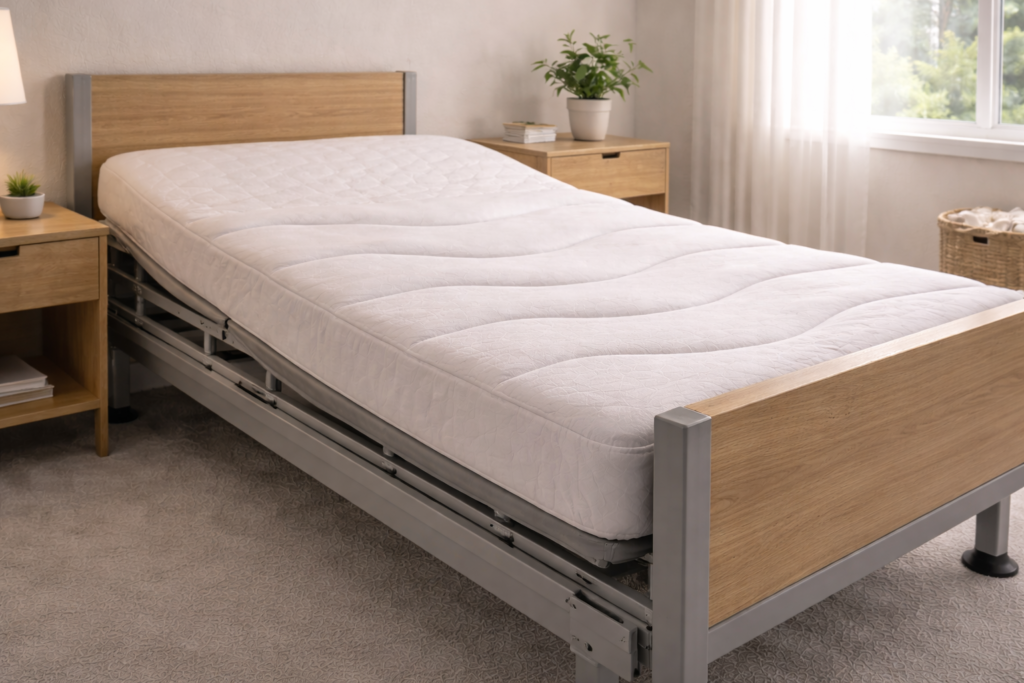
When someone spends extended time in bed, comfort becomes more complex than softness alone. Pressure, circulation, skin integrity, and positioning all begin to matter more.
Pressure relief beds and mattresses are designed to redistribute body weight more evenly, reduce concentrated pressure points, and support safer long-term rest. In home care settings, they are often just as important as the bed frame itself.
This guide explains what pressure relief systems are, who they are designed for, and why they play a central role in long-term home care.
What Is Pressure Relief?
Pressure relief refers to the ability of a mattress and bed system to distribute body weight in a way that reduces prolonged compression of specific areas.
When someone lies in one position for long periods, pressure builds under:
-
Hips
-
Shoulders
-
Heels
-
Elbows
-
Back of the head
If pressure remains constant without repositioning, circulation can be affected and skin breakdown may occur.
A pressure relief mattress helps reduce these concentrated forces by contouring and redistributing weight.
Why Standard Mattresses May Not Be Enough
Standard residential mattresses are designed for comfort during typical overnight sleep.
They are not always built for:
-
Extended daytime bed use
-
Limited repositioning
-
Reduced mobility
-
High medical risk situations
For someone who moves independently throughout the night, a standard mattress may be sufficient.
For someone who cannot easily change position, additional support becomes more important.
Types of Pressure Relief Mattresses
Pressure relief systems vary in design and capability. The appropriate type depends on mobility level and time spent in bed.
High-Density Foam Mattresses
These use layered foam structures that contour to the body.
They are often appropriate for:
-
Moderate mobility limitations
-
Increased rest time
-
Early-stage risk management
They provide stable support without mechanical components.
Alternating Pressure Systems
These mattresses use air cells that inflate and deflate in cycles.
The alternating movement:
-
Shifts pressure points automatically
-
Reduces continuous compression
-
Supports people who cannot reposition independently
These systems are often used in more advanced care situations.
Hybrid Systems
Some mattresses combine foam and air components to balance stability and pressure redistribution.
The goal is always the same: reduce prolonged concentrated pressure.
The Role of the Bed Frame
Pressure relief does not come from the mattress alone.
An adjustable medical bed or home hospital bed enhances pressure management by allowing:
-
Head and leg repositioning
-
Micro-adjustments throughout the day
-
Reduced sliding and shear forces
When angle and surface work together, pressure can be managed more effectively.
Without positioning capability, even a high-quality mattress may not reach its full benefit.
Who Benefits Most From Pressure Relief Systems?
Pressure relief beds and mattresses are most important when:
-
A person spends many hours per day in bed
-
Independent repositioning is limited
-
There is a history of skin breakdown
-
Circulation challenges are present
-
Recovery from surgery requires prolonged rest
Early consideration can prevent complications rather than reacting after problems develop.
Comfort and Circulation
Pressure management is not only about preventing injury. It also improves overall comfort.
Even mild prolonged pressure can cause:
-
Aching joints
-
Numbness
-
Stiffness
-
Restlessness
Redistributing weight more evenly allows the body to rest without constant micro-discomfort.
Over time, this can improve sleep quality and daytime comfort.
Emotional Considerations
Families sometimes associate pressure-relief systems with severe illness.
In reality, they are practical tools for managing reduced mobility.
Adding a pressure-relief mattress does not necessarily signal decline. In many cases, it supports stability and prevents unnecessary complications.
Like adjustable beds, these systems are about planning ahead rather than reacting late.
When a Standard Mattress Is Still Appropriate
Not every situation requires advanced pressure management.
A standard supportive mattress may be sufficient when:
-
The person moves independently
-
Time in bed is limited to overnight sleep
-
Skin integrity is stable
-
Care needs are minimal
The decision should reflect current functional need, not assumption.
Planning for Long-Term Use
When selecting a bed system for home use, it is helpful to consider the mattress and frame together.
Questions to consider include:
-
How many hours per day will the bed be used?
-
Can the person reposition independently?
-
Is caregiver assistance increasing?
-
Is height adjustment needed?
Pressure relief is part of a broader home care strategy.
When addressed early, it supports comfort, reduces risk, and contributes to sustainable long-term home living.