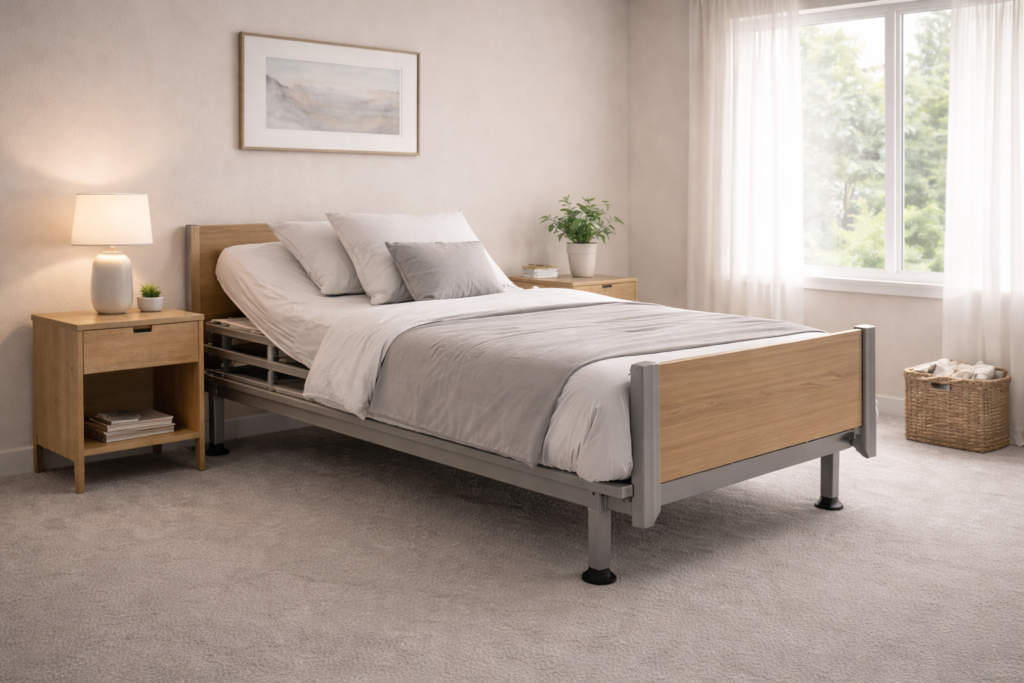
Home hospital beds are designed for situations where mobility, safety, or medical support needs go beyond what a standard adjustable bed can provide.
They are commonly used in private homes when someone requires significant assistance with movement, extended time in bed, or structured caregiving support. While they resemble hospital beds in design, they are adapted for long-term use in residential settings.
This guide explains what home hospital beds are, how they differ from other adjustable beds, and when they are typically appropriate in a home environment.
What Is a Home Hospital Bed?
A home hospital bed is a fully adjustable bed built for clinical-level positioning and safety, but intended for use outside a hospital.
Most models include:
-
Motorised head and leg elevation
-
Full bed height adjustment
-
Strong frame construction
-
Side rail compatibility
-
Compatibility with pressure-relief mattress systems
Unlike comfort-focused adjustable beds, home hospital beds are designed to support both the person using the bed and the caregiver assisting them.
Their primary purpose is functional safety and long-term care stability.
How Home Hospital Beds Differ From Adjustable Medical Beds
While adjustable medical beds often maintain a more residential appearance, home hospital beds prioritise structural capability.
Key differences typically include:
-
Wider height range (lower and higher adjustment limits)
-
Integrated side rail systems
-
Greater weight capacity
-
More durable frame construction
-
Easier access for caregiver tasks
Adjustable medical beds often support independence.
Home hospital beds often support assisted care.
The distinction becomes important when transfers require help, repositioning is frequent, or medical supervision increases.
When Is a Home Hospital Bed Typically Needed?
A home hospital bed is usually considered when physical limitations significantly affect daily movement.
Common situations include:
Limited Independent Transfers
If standing from bed requires assistance every time, height range and stability become critical.
A hospital-style bed can lower close to seated height for safe transfers and raise high enough to reduce caregiver strain.
Extended Time in Bed
When someone spends most of the day in bed due to illness or advanced mobility limitations, positioning flexibility becomes essential.
Frequent angle adjustments help maintain comfort and reduce pressure risks.
Increased Fall Risk
Side rails or positioning features may be appropriate when there is a risk of rolling or sliding during rest.
Proper use requires careful consideration, but the structural capability is often necessary.
Progressive Neurological or Chronic Conditions
Conditions that affect strength, coordination, or endurance may gradually increase care requirements.
In these cases, choosing a bed with broader adjustment range can prevent future equipment changes.
Palliative or Long-Term Care at Home
In situations where care is ongoing and intensive, a hospital-style bed provides the flexibility and durability required for daily assistance.
Supporting Caregiver Safety
Caregiver strain is a significant factor in long-term home care.
Home hospital beds can:
-
Raise to comfortable working height
-
Reduce bending during repositioning
-
Provide stable support during transfers
-
Improve access for hygiene tasks
Over time, this can reduce injury risk and make sustained home care more manageable.
Mattress Compatibility and Pressure Care
Hospital-style beds are typically compatible with advanced pressure-relief systems.
These may include:
-
High-density foam mattresses
-
Alternating pressure systems
-
Layered pressure redistribution surfaces
This compatibility becomes important when someone has limited mobility or spends prolonged hours in bed.
The bed frame and mattress system work together to manage comfort and skin integrity.
Appearance and Emotional Considerations
One concern families often have is that a hospital-style bed will make the home feel clinical.
Modern designs vary widely. Some incorporate wooden panels or softer visual elements to blend more comfortably into residential spaces.
While the appearance is more structured than residential adjustable beds, many families find the practical benefits outweigh aesthetic concerns.
The goal is stability, safety, and long-term comfort — not clinical atmosphere.
When a Home Hospital Bed May Not Be Necessary
Not everyone who needs positioning support requires a full hospital-style bed.
It may not be necessary when:
-
Independent transfers are still safe
-
Height adjustment is not required
-
Caregiver involvement is minimal
-
Bed use is primarily overnight
In these cases, an adjustable medical bed may provide sufficient support.
Choosing the appropriate level of equipment depends on functional need rather than assumption.
Planning Ahead
Home hospital beds are often long-term investments.
Before deciding, it helps to consider:
-
Current mobility level
-
Expected progression of needs
-
Bedroom space and layout
-
Caregiver involvement
-
Mattress requirements
Selecting a bed with appropriate adjustment range and durability can prevent future disruptions.
When care needs increase, having the right structural support in place can make home-based care safer and more sustainable.