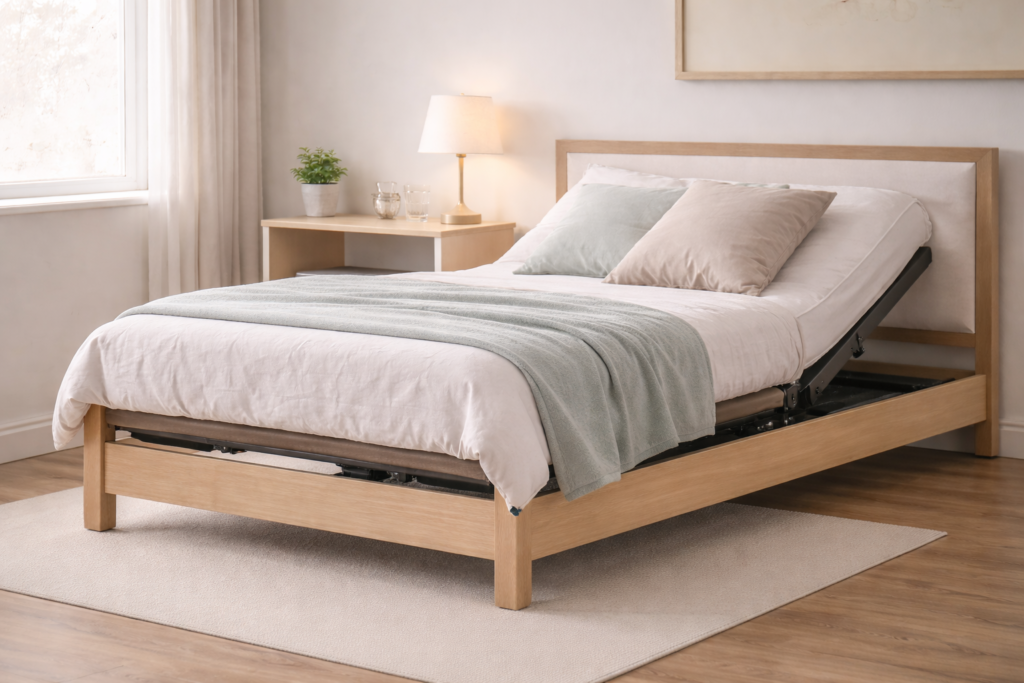
Adjustable beds are designed to improve comfort, positioning, and day-to-day independence at home. But once someone decides an adjustable bed may be appropriate, the next question is often practical:
Should it be manual or electric?
Understanding the difference is less about features and more about who will be using the bed, how often it will be adjusted, and whether independent control is important.
This guide explains how manual and electric adjustable beds differ in operation, comfort, caregiver involvement, and long-term suitability.
If you are still deciding whether an adjustable bed is appropriate in the first place, our guide to Adjustable Medical Beds: How They Improve Comfort and Independence explains when they are most beneficial for long-term home use
How Manual Adjustable Beds Work
Common characteristics:
-
Head and foot sections adjusted with a crank
-
No electrical components
-
Fewer moving parts
-
Often lower upfront cost
To change the bed position, someone must physically turn the crank. Depending on the model, this may require moderate effort.
When Manual Beds May Be Appropriate
Manual adjustable beds can work well when:
-
Adjustments are infrequent
-
A caregiver is consistently available
-
Budget is a primary constraint
-
The user does not need to reposition independently
They are often used in temporary recovery situations or in environments where power access is unreliable.
However, they do require physical effort and are less convenient for frequent repositioning.
How Electric Adjustable Beds Work
Common characteristics:
-
Motorised head and foot adjustment
-
Push-button control
-
Smooth, incremental positioning
-
Minimal physical effort required
Some models also include height adjustment, which can make transfers safer and easier.
When Electric Beds Are More Appropriate
Electric adjustable beds are typically better suited for:
-
Long-term home use
-
Individuals with limited strength or mobility
-
People who reposition frequently during the day
-
Situations where independent control supports dignity and autonomy
For many aging-in-place households, the ability to change position without assistance becomes an important factor over time.
Independence and Daily Use
The most meaningful difference between manual and electric beds is not mechanical — it is functional.
With a manual bed:
-
Someone must operate the crank
-
Position changes may be slower
-
Independence may be limited
With an electric bed:
-
The user can often reposition independently
-
Adjustments are quicker and more precise
-
Comfort changes can happen throughout the day
For individuals managing chronic pain, circulation issues, or respiratory discomfort, small position adjustments may be needed multiple times daily. In these cases, motorised control often reduces caregiver strain and increases user comfort.
This is one of the reasons adjustable beds are commonly recommended when comfort and independence need to be balanced over long periods, as explained in our main guide on adjustable medical beds and independence.
Caregiver Considerations
From a caregiver perspective, the difference can be significant.
Manual beds may:
-
Require bending and physical effort
-
Increase strain over time
-
Slow down repositioning tasks
Electric beds may:
-
Reduce repetitive physical effort
-
Allow quicker positioning for transfers
-
Improve overall safety during adjustments
In homes where one person provides most of the assistance, reducing small daily strains can matter more than it first appears.
Power and Reliability
Manual beds do not depend on electricity. This can be reassuring in areas with occasional power interruptions.
Electric beds do require power, but many models include battery backup systems that allow temporary operation during outages.
For households where medical equipment already relies on electricity, the additional power demand of an adjustable bed is usually modest. Still, planning for safe electrical setup is part of responsible home preparation.
Cost Differences
Manual adjustable beds typically cost less upfront.
Electric adjustable beds cost more due to motor systems and control components.
However, when evaluating cost, it helps to consider:
-
Expected duration of use
-
Frequency of repositioning
-
Caregiver workload
-
Independence needs
For short-term recovery, a manual option may be sufficient. For long-term comfort and autonomy, electric systems are often more practical.
Long-Term Suitability
Manual beds can meet basic positioning needs.
Electric beds tend to adapt better as mobility changes over time.
When adjustable positioning becomes part of daily living rather than occasional comfort, ease of use usually becomes more important than mechanical simplicity.
Choosing between manual and electric is less about “which is better” and more about matching the bed to the household’s realistic daily needs.
A Practical Decision Framework
A manual adjustable bed may be appropriate if:
-
Position changes are occasional
-
A caregiver is always present
-
Budget limitations are strict
-
The situation is temporary
An electric adjustable bed may be more appropriate if:
-
The user values independent control
-
Repositioning is frequent
-
Strength or mobility is limited
-
The setup is long-term
When in doubt, consider how often the bed position is likely to change in a typical week. That usually clarifies the direction.
Careful planning now can prevent frustration later, especially when comfort, dignity, and daily usability are involved.